Teak sideboards, Eames lounge chairs, geometric patterns, and organic curves. Mid-Century Modern (MCM) style, originating from the 1940s to 60s, remains one of the most beloved interior styles today. It is functional, optimistic, and effortlessly cool.
But when it comes to wall art, many MCM enthusiasts stick to sunburst clocks or atomic patterns. We invite you to try a more sophisticated pairing: Japanese Calligraphy (“Sho”). Historically and aesthetically, they are a match made in heaven.
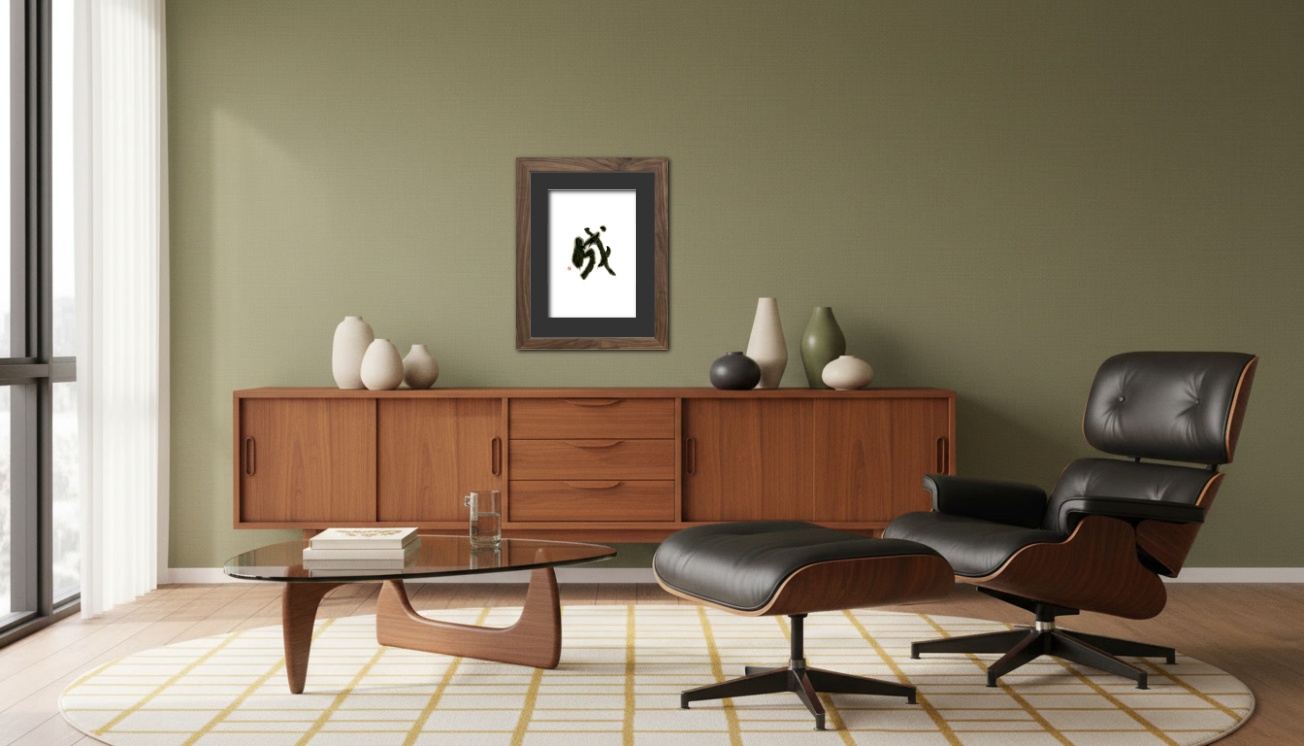
Vintage vibes meet timeless ink.
1. The 1950s Connection: East Meets West
Did you know that the Mid-Century era was a golden age for the exchange between Japanese calligraphy and Western art?
In the 1950s, abstract expressionist painters like Franz Kline and Mark Tobey were heavily influenced by the spontaneity and energy of Japanese “Sho.” Conversely, Japanese avant-garde calligraphers were breaking traditional rules. Placing a bold ink work in an MCM room is not just a stylistic choice; it is a nod to a genuine historical dialogue between East and West.
2. Warm Wood and Black Ink
MCM interiors are defined by warm wood tones—Teak, Walnut, Rosewood.
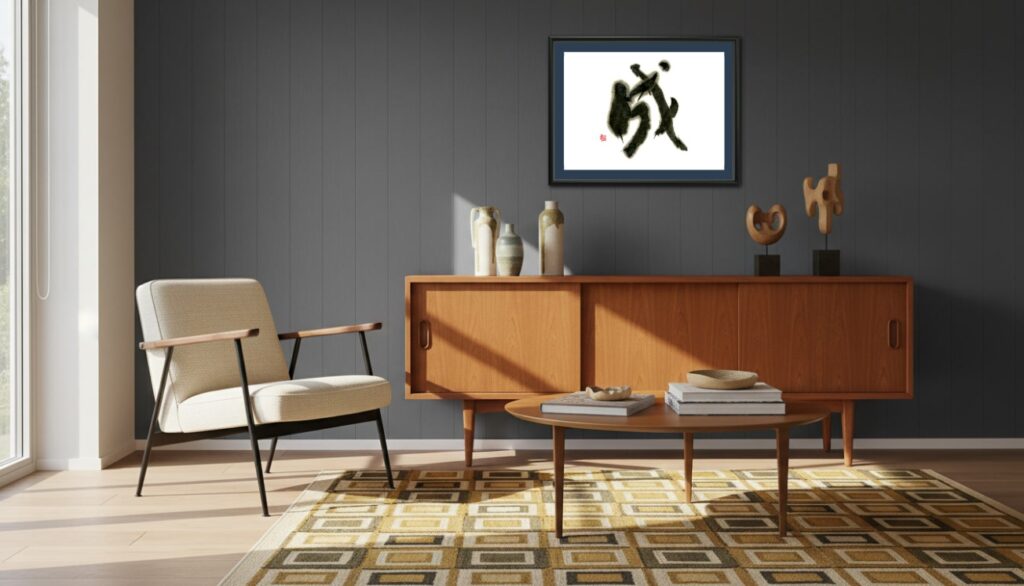
The deep, matte black of Sumi ink compliments these reddish-brown woods perfectly. It adds a “grounding” element that prevents the retro colors (mustard yellow, olive green) from looking too kitschy. It brings a modern, intellectual edge to the nostalgia.
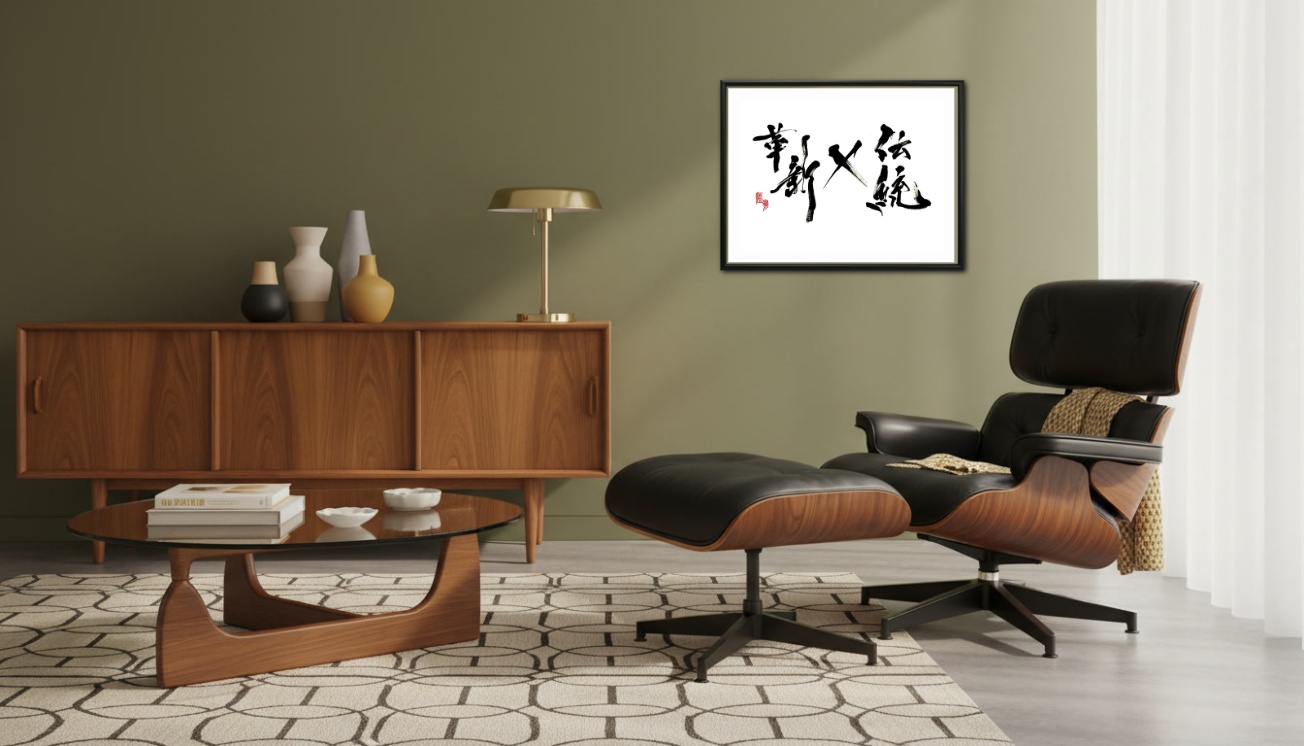
The warmth of walnut and the depth of ink create a rich harmony.
3. Styling Tips for the MCM Collector
Frame It Right
To match your vintage furniture:
- Wood Frames: Choose Walnut or Cherry wood frames with a simple, flat profile.
- Float Mounting: Just as MCM furniture often has “legs” to look light and airy, float mounting the artwork (leaving space around the paper) keeps the look modern and uncluttered.
Composition
MCM is about “Organic Geometry.” Choose calligraphy works that balance bold lines with organic splashes. An artwork with a strong sense of movement looks stunning hung above a low, long sideboard (credenza).
4. Recommended Art Style
Look for “Avant-Garde” works that resemble abstract paintings. The meaning of the character is less important than the composition and the “Action” of the brushstroke.
Complete Your Vintage Look
Does your Eames chair need a companion on the wall?
Use our simulator to see how abstract calligraphy creates the perfect backdrop for your design classics.
タイムレス・クール:ミッドセンチュリーモダンの部屋に「書」が似合う理由
チーク材のサイドボード、イームズのラウンジチェア、幾何学模様、そして有機的な曲線。1940年代から60年代に生まれた「ミッドセンチュリーモダン(MCM)」は、今日でも最も愛されるインテリアスタイルの一つです。それは機能的で、楽観的で、そして肩の力が抜けたかっこよさ(エフォートレス・クール)があります。
しかし、壁のアートとなると、多くのファンがサンバースト・クロックや当時のポスターを選びがちです。ここでは、より洗練されたペアリングをご提案します。それは「日本の書道アート」です。歴史的にも美学的にも、これらは最高の相性を見せます。
ヴィンテージの空気感と、タイムレスな墨の出会い。
1. 1950年代の繋がり:東洋と西洋の対話
ミッドセンチュリー期が、日本の書と西洋美術の交流の黄金期であったことをご存知でしょうか?
1950年代、フランツ・クラインやマーク・トビーといった抽象表現主義の画家たちは、日本の「書」の自発性とエネルギーに多大な影響を受けました。逆に、日本の前衛書家たちも伝統を打ち破る試みをしていました。MCMの部屋に大胆な墨のアートを飾ることは、単なるスタイルの選択ではなく、当時の「東洋と西洋の歴史的な対話」へのオマージュ(敬意)となるのです。
2. 温かい木と、黒い墨
ミッドセンチュリーのインテリアは、チーク、ウォールナット、ローズウッドといった温かみのある木の色調で定義されます。
墨の深くマットな黒は、これらの赤みがかった茶色の木材を完璧に引き立てます。それは、レトロな配色(マスタードイエローやオリーブグリーン)がキッチュになりすぎるのを防ぐ「引き締め役」となり、ノスタルジーの中にモダンで知的なエッジを加えます。
ウォールナットの温もりと、墨の深みがリッチなハーモニーを奏でます。
3. コレクターのためのスタイリング術
フレーム選びが鍵
ヴィンテージ家具に合わせるなら:
- 木製フレーム:ウォールナットやチェリー材の、フラットでシンプルな形状のフレームを選びます。
- 浮かし額装:MCMの家具が「脚付き」で軽やかに見えるのと同様に、アートも台紙から浮かせて余白を持たせることで、モダンですっきりとした印象を保てます。
構図のバランス
MCMのキーワードは「有機的な幾何学」です。大胆な線と、有機的な飛沫のバランスが取れた書を選びましょう。動きのある作品を、背の低いサイドボード(クレデンザ)の上に飾ると、素晴らしいバランスになります。
4. おすすめのアートスタイル
文字の意味よりも、構図や筆の「アクション(動き)」を重視した「前衛書道(墨象)」がおすすめです。それはまるで、モノクロームの抽象画のように空間に馴染みます。
ヴィンテージ・ルックを完成させる
あなたのイームズチェアには、壁の相棒が必要ではありませんか?
シミュレーターを使って、抽象的な書がどのようにデザインの名作たちの背景として機能するか、確かめてみてください。