You have invested in a designer sofa, bespoke cabinetry, and architectural lighting. Your home is a masterpiece of design. Yet, when it comes to the walls, many homeowners settle for mass-produced prints or posters.
While high-quality giclée prints have their place, they often fall flat—quite literally—in a luxury setting. In this article, we explore why discerning collectors choose Original Japanese Calligraphy and why the presence of “Real Ink” elevates a room in a way no print ever can.
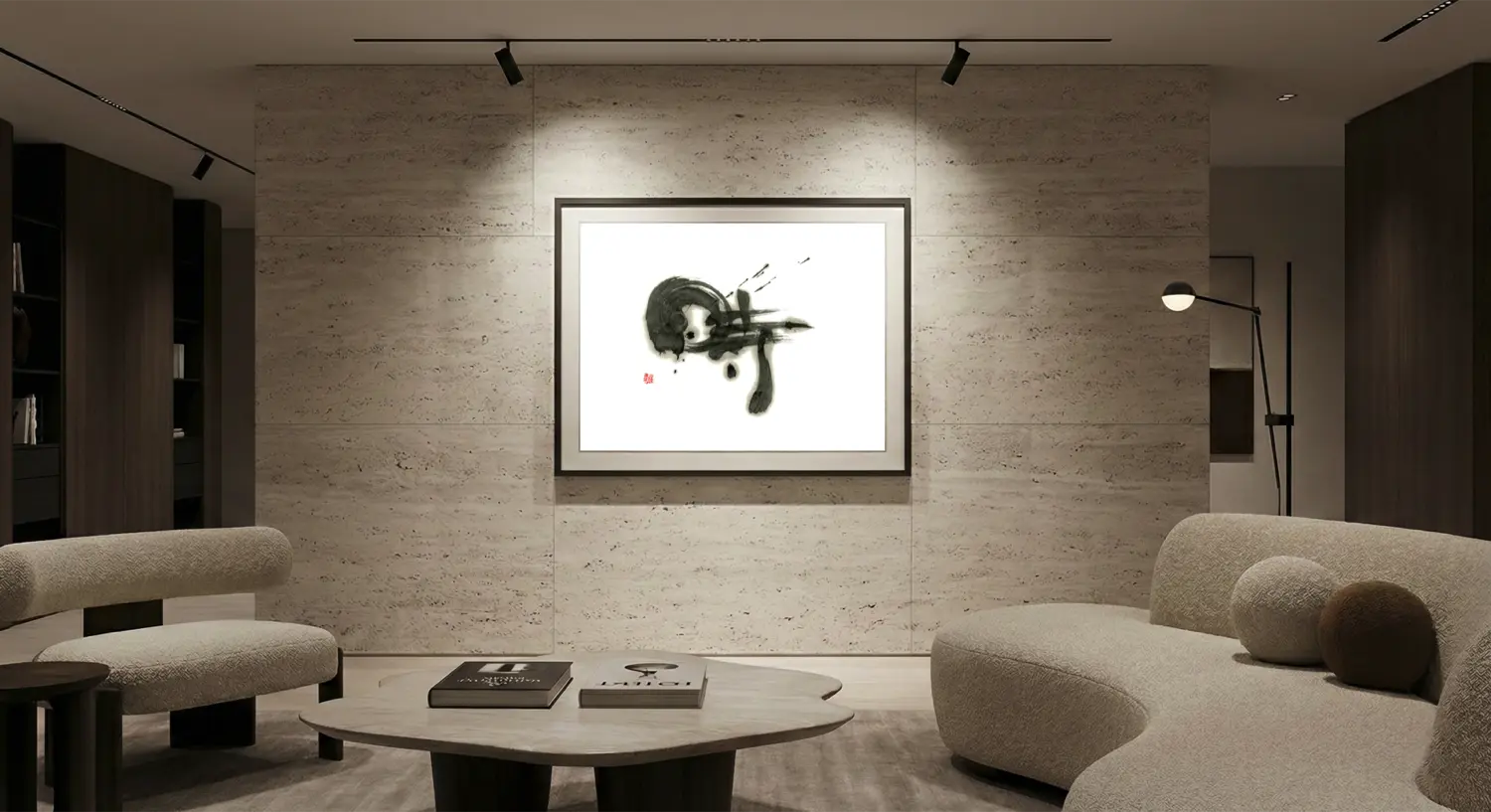
The depth of real ink is something a printer cannot replicate.
1. The “Aura” of the Original
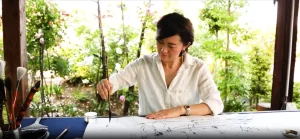
The philosopher Walter Benjamin spoke of the “Aura” of a work of art—its unique presence in time and space. A print is a copy; it has no history. An original work of calligraphy captures a specific moment of the artist’s life.
When you stand before a hand-brushed work, you can feel the speed of the brush, the hesitation, the explosion of energy. This “Ki” (Life Force) resides in the ink. A print, no matter how high the resolution, is merely a reproduction of that energy, not the energy itself.
2. Texture: The 3rd Dimension
Japanese Calligraphy is essentially 3-dimensional.
- Absorption: Sumi ink soaks into the fibers of Washi paper, creating layers of gray and black that change depending on the viewing angle.
- Micro-texture: The charcoal particles in the ink reflect light differently than chemical printer toner.
- Wrinkles and Waves: The paper reacts to the water in the ink, creating subtle undulations that breathe with the room’s humidity.
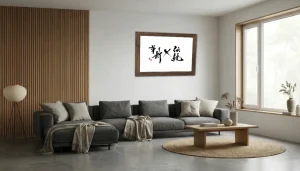
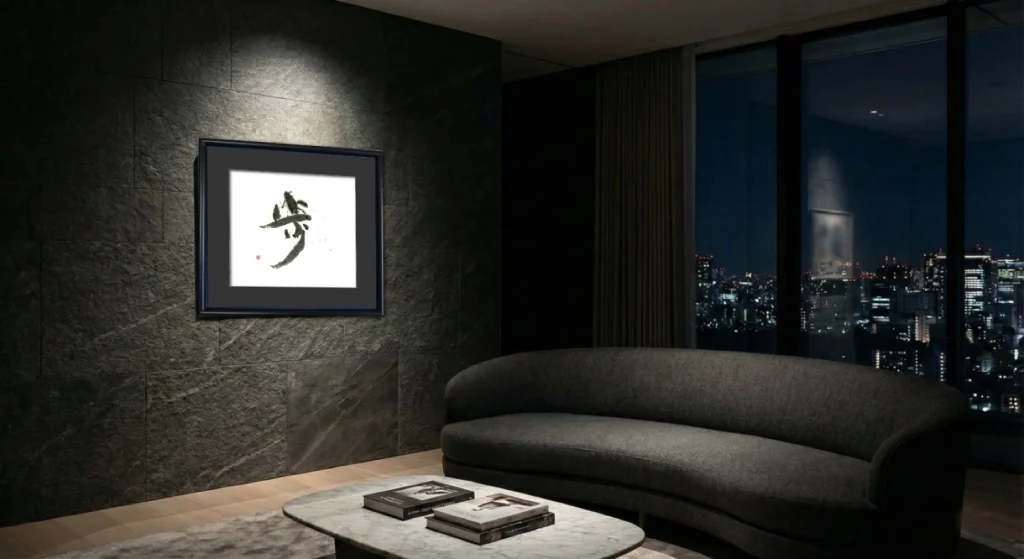
In a minimalist home with flat surfaces (glass, polished stone), this organic, complex texture provides a vital sensory balance.
3. Scarcity and Story
Luxury is defined by scarcity. A limited-edition print might be one of 500. An original calligraphy piece is one of one.
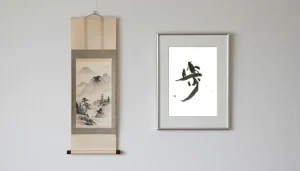
Even if the artist writes the same character again, the splash of ink and the “Kasure” (brush streaks) will never be identical. Owning an original means you are the custodian of a unique creation. It gives you a story to tell your guests—not just about where you bought it, but about the philosophy and the artist behind it.
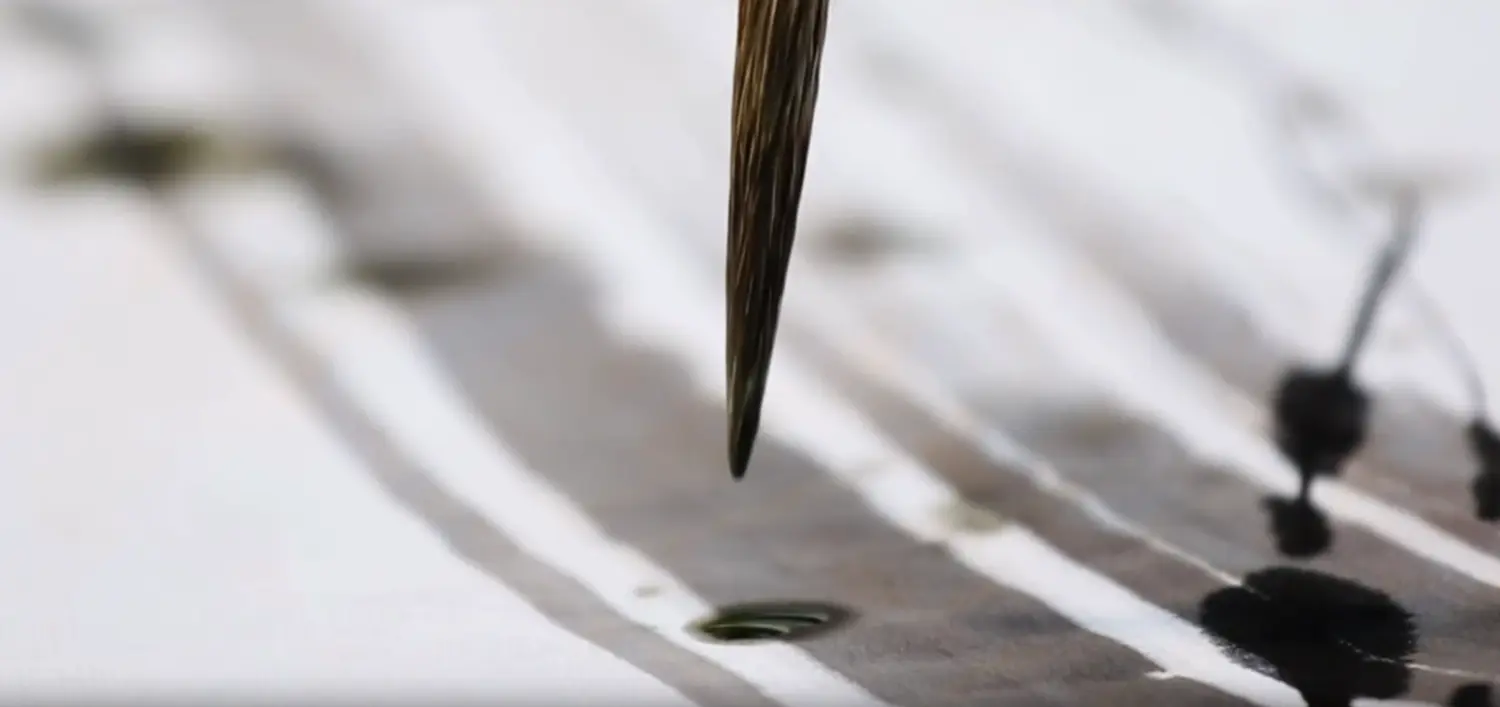
One original piece holds more weight than a gallery of prints.
4. Art as an Asset
Finally, original art is an asset. While posters depreciate the moment you buy them, original works by established artists retain or increase their value over time. Collecting Chosho Yabe’s work is not just decorating; it is patronizing the arts and preserving a cultural legacy.
See the Difference on Your Wall
Are you ready to graduate from prints to original art?
Use our AR simulator to visualize how a genuine, textured piece of calligraphy anchors your space with dignity.
なぜラグジュアリーホームには、プリントではなく「原画」を飾るべきなのか
デザイナーズソファ、特注の家具、計算された照明。あなたの家はデザインの傑作かもしれません。しかし、壁に目を向けると、多くの住宅所有者が大量生産されたプリントやポスターで妥協してしまっています。
高品質なジークレー版画にも役割はありますが、ラグジュアリーな空間においては、それらは文字通り「平坦」に見えてしまうことがあります。本記事では、なぜ審美眼を持つコレクターが「肉筆の書(原画)」を選び、本物の墨の存在感がどのように部屋の格を上げるのかを解説します。
本物の墨が持つ奥行きは、プリンターでは決して再現できません。
1. 「アウラ」の存在
哲学者のヴァルター・ベンヤミンは、芸術作品が持つ「アウラ(一回性のオーラ)」について語りました。プリントはコピーであり、歴史を持ちません。しかし、書道の原画は、アーティストの人生における特定の「瞬間」を切り取ったものです。
手書きの作品の前に立つと、筆の速度、迷い、爆発するようなエネルギーを感じることができます。この「気」は墨の中に宿ります。どれほど高解像度なプリントであっても、それはエネルギーの「複製」に過ぎず、エネルギーそのものではないのです。
2. テクスチャ:第三の次元
書道は本質的に3次元のアートです。
- 浸透:墨は和紙の繊維の中へと染み込み、見る角度によって変化するグレーと黒の層(レイヤー)を作り出します。
- 微細な質感:墨に含まれる炭素の粒子は、化学的なトナーとは異なり、光を複雑に反射・吸収します。
- ゆらぎ:紙は墨の水分に反応し、わずかな凹凸を生み出します。これは部屋の湿度と共に呼吸します。
ガラスや磨かれた石など、平滑な表面が多いモダンな家において、この有機的で複雑なテクスチャは、視覚と感覚に不可欠なバランスをもたらします。
3. 希少性とストーリー
ラグジュアリーの本質は「希少性」にあります。限定版のプリントは500枚のうちの1枚かもしれませんが、原画は「世界に1つ(One of one)」です。
たとえアーティストが同じ文字をもう一度書いたとしても、墨の飛沫や「掠れ(かすれ)」が完全に一致することは二度とありません。原画を所有することは、唯一無二の創造物の守り人になることを意味します。それはゲストに対して、購入場所だけでなく、その作品に込められた哲学やアーティストの物語を語る喜びを与えてくれます。
たった一枚の「本物」は、無数のプリントよりも雄弁です。
4. 資産としてのアート
最後に、原画は資産です。ポスターは購入した瞬間に価値が下がりますが、確立されたアーティストによる原画は、時と共にその価値を維持、あるいは高めていきます。矢部澄翔の作品をコレクションすることは、単なる装飾ではなく、芸術を支援し、文化遺産を継承する行為でもあります。
壁で違いを確認する
プリントを卒業し、本物のアートを迎える準備はできましたか?
ARシミュレーターを使って、本物の墨と紙が持つ質感と威厳が、あなたの空間をどのように変えるか体験してください。