The Philosophy Behind the Brush: Decoding the Meaning and Symbolism of Calligraphy Art
Introduction: Calligraphy as Meditative Action
Japanese Calligraphy Art, or Shodō, is frequently admired for its raw aesthetic beauty, yet its true power lies not in the finished form but in the philosophy embedded within its creation. This art form is a profound meditation—a single, irreversible expression of the artist’s Ki (気, life energy) and unwavering intention.
For art collectors, designers, and commercial clients seeking profound depth, this article decodes the essential philosophical concepts and symbolism that make contemporary calligraphy a unique and transformative art investment. Understanding these principles is key to maximizing the spiritual and aesthetic ROI of a commissioned piece.
1. The Core Philosophy of Shodō: Time and Intention
Unlike painting, where corrections are possible and layers can be built over time, Shodō is defined by its commitment to the moment, demanding absolute focus and presence. This commitment gives the artwork its intense, authentic energy.
The Doctrine of Irreversibility
- Ichigo Ichie (一期一会): This concept—“one time, one meeting”—is central to the Japanese art form. Every brush stroke is an unrepeatable event, mirroring the transient nature of life itself. This translates to an intensity and authenticity that permeates the artwork, serving as a powerful reminder to the viewer to be fully present in the moment.
- Ki (気, Life Energy): The flow of ink is the flow of the artist’s Ki. The speed, pressure, and modulation of the stroke are direct, unfiltered expressions of their vital force. This energetic quality allows the artwork to dramatically influence the psychological and physical atmosphere of the room in which it is placed. A piece of calligraphy is a portable energetic anchor.
2. Decoding Symbols: Kanji as Universal Concepts and the Power of Sumi Ink
The Japanese Kanji used in contemporary calligraphy are not merely letters; they are condensed symbols representing universal human concepts and spiritual truths. Understanding the meaning enhances the appreciation of the art’s power.
The Material: Sumi Ink Art
The medium itself—Sumi Ink—is intrinsically tied to the philosophy. The deep blackness and the infinite shades of gray achieved by manipulating the water-to-ink ratio embody the concept of Wabi-Sabi. The accidental textures, the bleeding edges, and the stark contrast celebrate imperfection and the beauty of natural material limits. Searching for ‘sumi ink art’ often leads directly to this unique aesthetic.
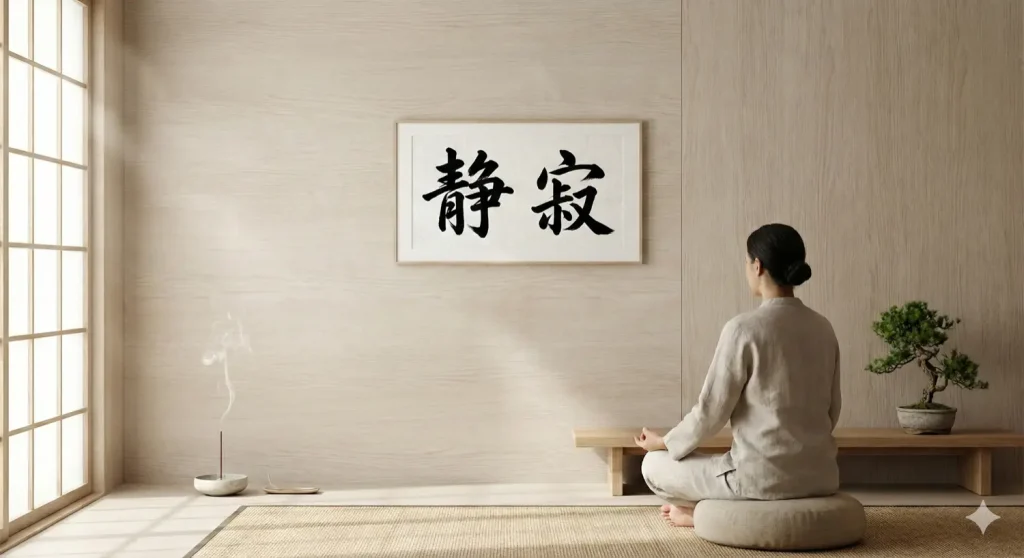
| Kanji | Meaning (Philosophy) | Modern Application |
|---|---|---|
| 無 (Mu) | Void / Nothingness: The Zen concept of transcending the ego, expectations, and attachments to find freedom. | Meditation spaces, retreat centers, leadership training rooms. |
| 和 (Wa) | Harmony: Peace, unity, and balance within a group, community, or internal state. Essential for consensus building. | Corporate boardrooms, hospitality lobbies, shared living spaces. |
| 志 (Kokorozashi) | Will / Purpose / Aspiration: A deep, unwavering personal goal or mission. A powerful motivational force. | Executive offices, entrepreneurial workspaces, motivational environments. |
| 間 (Ma) | Space / Intentional Void: The consciousness of negative space. The crucial interval between elements that creates meaning. | Minimalist interiors (Japandi), architectural design firms, artistic studios. |
The Philosophy Behind the Brush: Decoding the Meaning and Symbolism of Calligraphy Art
3. The Modern Appeal: Art as a Spiritual Anchor Rooted in Wabi-Sabi
In a world defined by digital clutter, constant distraction, and fleeting trends, modern calligraphy provides an essential spiritual anchor. It is a counterpoint to complexity, urging the viewer to return to simple, profound truths, often through the lens of Wabi-Sabi.
The Authority of Experience: The Wabi-Sabi Connection
Our commitment to the Wabi-Sabi philosophy is rooted not just in theory, but in practical engagement with cultural preservation. Yabe Chosho has a distinguished history of participating in events that celebrate Japanese aesthetics, notably appearing three times at the Saitama WABI SABI Grand Festival (2017, 2018, 2020). This recurring role in a major cultural event dedicated to the very concept of Wabi-Sabi underscores the deep, authentic connection between the artist’s practice and this core Japanese philosophy, providing unmatched authority and understanding when translating the concept into modern art commissions.
The Transformative Effect on Space
- Wabi-Sabi Aesthetics: The powerful simplicity of sumi ink on white paper embraces the Wabi-Sabi ideal, eliminating visual noise and creating an atmosphere of subdued, natural beauty. This makes it an ideal centerpiece for spaces dedicated to concentration, reflection, and decision-making.
- Mindfulness in Art: The focus required to appreciate the ink flow and the texture encourages a state of mindfulness, reducing stress and enhancing clarity in executive offices or study areas.
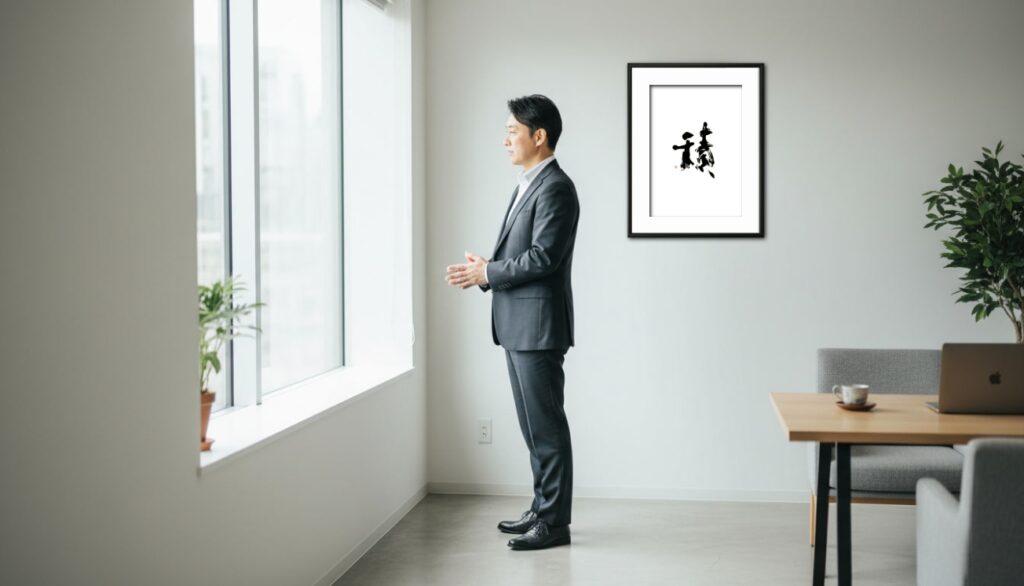
- A Personal Narrative and Motivational Tool: When commissioning a bespoke piece, the client chooses the Kanji that articulates their unique philosophy or the company’s core values. This transforms the art into a deeply personal, continuous motivational tool rather than a generic piece of décor.
Conclusion: Investing in Depth, History, and Philosophy
Investing in Japanese calligraphy art is investing in depth, philosophy, and history. The work serves as a silent, powerful mentor, constantly challenging the viewer to find harmony, purpose, and beauty in the fleeting nature of existence. Its universal themes and powerful execution ensure that its value, both spiritual and commercial, endures across cultures and generations.
筆の裏に秘められた哲学:書道アートの意味と象徴性を読み解く
はじめに:瞑想的な行為としての書道
日本の書道アート(書道)は、その生々しい美しさで称賛されますが、その真の力は完成した形ではなく、創作に埋め込まれた哲学にあります。この芸術形式は深遠な瞑想であり、作家の*気*(生命エネルギー)と揺るぎない意図を、単一かつ取り消し不可能な表現で表します。
深遠な深みを求めるアートコレクター、デザイナー、法人クライアントのために、この記事では、現代書アートをユニークで変革的なアート投資たらしめる、本質的な哲学的概念と象徴性を解読します。これらの原則を理解することは、コミッション作品の精神的および美的ROIを最大化するための鍵となります。
1. 書道の核心的な哲学:時間と意図
修正が可能で、時間をかけて層を重ねられる絵画とは異なり、書道はその瞬間にすべてを懸けるという点に定義され、絶対的な集中と存在感を要求します。このコミットメントが、アートワークに強烈で本質的なエネルギーを与えます。
不可逆性の教義
- 一期一会: このコンセプト、「二度とない瞬間を大切にする」が、日本の芸術形式の中心です。筆のすべてのストロークは再現不可能な出来事であり、存在そのものの移ろいやすい性質を反映しています。これは、作品全体に浸透する強度と本物らしさに繋がり、見る者に対し、その瞬間に完全に存在するよう促す強力なリマインダーとなります。
- 気(生命エネルギー): 墨の流れは作家の*気*の流れです。ストロークのスピード、圧力、変化は、彼らの生命力を直接的かつフィルタリングされていない形で表現します。このエネルギー的な質が、作品が置かれた部屋の心理的および物理的な雰囲気に劇的な影響を与えることを可能にします。書作品は、言わば持ち運び可能なエネルギーの錨(アンカー)なのです。
2. 象徴の解読:普遍的な概念としての漢字
現代書アートで使われる漢字は、単なる文字ではなく、普遍的な人間の概念、精神的な真実、そして深遠な知恵を象徴的に凝縮したものです。特定の空間のために作品を選ぶ際、その「意味」こそがすべてを決定づけます。
素材:墨アート(Sumi Ink Art)
媒体そのもの、すなわち墨(Sumi Ink)は、哲学と本質的に結びついています。水と墨の比率を操作することで達成される深みのある黒と無限の灰色の濃淡は、侘び寂び(Wabi-Sabi)の概念を体現しています。偶発的なテクスチャ、滲んだ境界線、そして荒々しいコントラストは、不完全さと自然の素材の限界の美しさを讃えます。「sumi ink art」という検索は、しばしばこのユニークな美意識へと直接繋がります。
| 漢字 | 意味(哲学) | 現代における適用例 |
|---|---|---|
| 無 (Mu) | 空 / 無: エゴや期待、執着を手放し、自由を見出すという禅の概念。 | 瞑想スペース、リトリートセンター、リーダーシップ研修室。 |
| 和 (Wa) | 調和: グループ、コミュニティ、または内面における平和、統一、バランス。コンセンサス形成に不可欠。 | 企業役員室、ホスピタリティロビー、共有リビングスペース。 |
| 志 (Kokorozashi) | 意志 / 目的 / 抱負: 深く、揺るぎない個人的な目標や使命。強力なモチベーションの源。 | エグゼクティブオフィス、起業家のワークスペース、モチベーションを高める環境。 |
| 間 (Ma) | 空間 / 意図的な余白: ネガティブスペースの意識。要素間に意味を生み出す重要な間隔。 | ミニマリストインテリア(Japandi)、建築デザイン事務所、アートスタジオ。 |
3. 現代的な魅力:侘び寂びに根差した精神的な錨
デジタルの雑然さや絶え間ない気晴らしによって定義される世界において、現代書アートは不可欠な精神的な錨を提供します。それは複雑さの対極にあり、多くの場合、侘び寂びのレンズを通して、見る者に対し、シンプルで深遠な真実へと立ち返るよう促します。
経験に裏打ちされた権威:侘び寂びとの繋がり
私たちの侘び寂びの哲学へのコミットメントは、単なる理論ではなく、文化的な活動への実践的な関与に根ざしています。Yabe Choshoは、日本の美意識を讃えるイベントへの参加実績が豊富であり、特に埼玉WABI SABI大祭典(2017年、2018年、2020年)へ繰り返し出演した実績は特筆に値します。侘び寂びのコンセプト自体に特化した主要な文化イベントに継続的に参加していることは、作家の活動とこの日本の核心的な哲学との間に深くて本物の繋がりがあることを示しており、モダンアートのコミッションへ翻訳する際に比類のない権威と理解を提供します。
空間への変革的な効果
- 侘び寂びの美学: 白い紙上の力強い墨(sumi ink)の簡素さは、*侘び寂び*の理想を受け入れ、視覚的なノイズを取り除き、抑制された自然の美しさの雰囲気を作り出します。これは、集中、内省、意思決定のための空間のセンターピースとして理想的です。
- アートにおけるマインドフルネス: 墨の流れやテクスチャを鑑賞するために必要な集中は、マインドフルネスの状態を促し、エグゼクティブオフィスや書斎でのストレスを軽減し、明晰さを高めます。
- 個人的な物語とモチベーションのツール: オーダーメイドの作品を依頼する際、クライアントは自身のユニークな哲学や会社のコアバリューを明確にする漢字を選びます。これは、アートを一般的な装飾品ではなく、深く個人的で継続的なモチベーションのツールへと変貌させます。
結論:深み、歴史、哲学への投資
日本の書道アートへの投資は、深み、哲学、そして歴史への投資です。作品は静かな、しかし力強い指導者として機能し、見る者に対し、移ろいゆく存在の性質の中に調和、目的、そして美を見出すよう常に問いかけます。その普遍的なテーマと力強い実行は、その価値が精神的にも商業的にも、文化や世代を超えて持続することを保証します。