In a world filled with digital noise and constant notifications, our homes need to be more than just places to sleep. They must be sanctuaries—places where we can hit the reset button on our souls.
This is where the concept of “Zen Interior” goes beyond mere style. It is about designing a space that actively lowers your heart rate and clears your mind. And in this quiet space, Japanese Calligraphy (“Sho”) acts not as a decoration, but as a visual anchor for mindfulness.
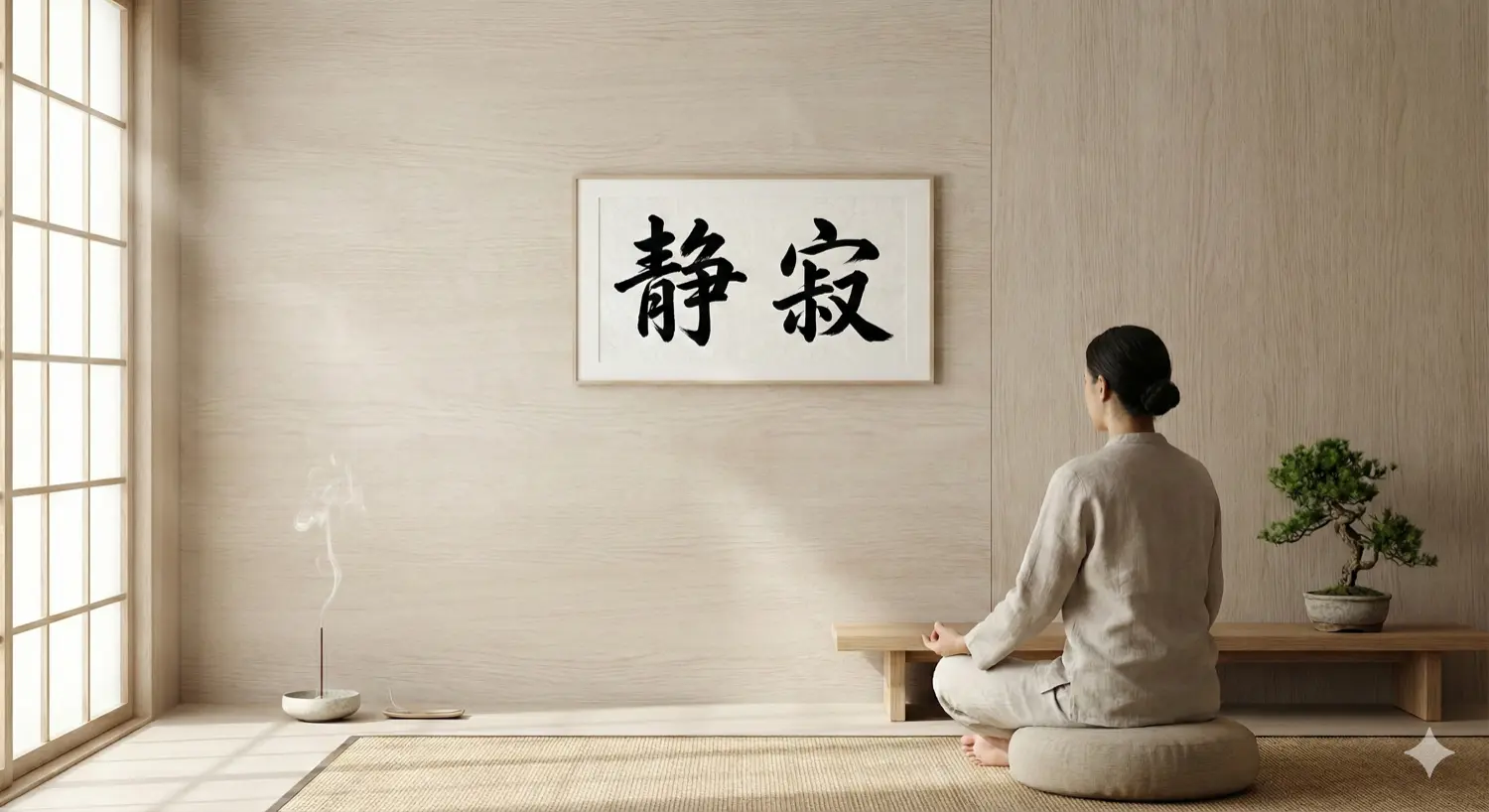
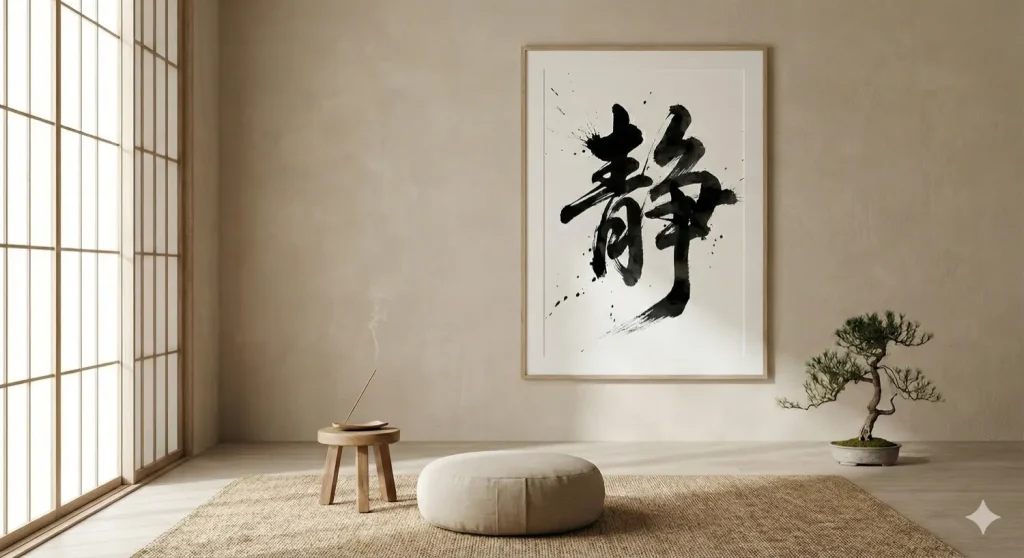
A visual anchor for your meditation practice.
1. The Psychology of Black and White
Why do we find monochrome photography or ink paintings so calming? Color stimulates the brain; it demands attention. In contrast, the world of Black (Sumi) and White (Paper) absorbs visual noise.
In Zen philosophy, we often speak of “Ku” (Emptiness). The black ink does not just sit on the paper; it cuts through the white space to create a void. When you gaze at a piece of calligraphy art, your brain doesn’t have to process complex color information. It allows your mind to settle into the contrast, finding peace in the simplicity.
2. Don’t “Read.” Just “Feel.”
For many international art lovers, Japanese characters act as beautiful, abstract forms rather than readable text. This is actually a significant advantage for creating a mindful space.
Instead of engaging your logical brain to “read” or understand the meaning, you are invited to focus purely on the energy of the work. Whether it is a traditional character or a completely abstract “Bokushou” piece, trace the flow of the brush with your eyes—the speed, the pause, the splash. This visual tracking mimics the rhythm of breathing, naturally guiding you into a meditative state.
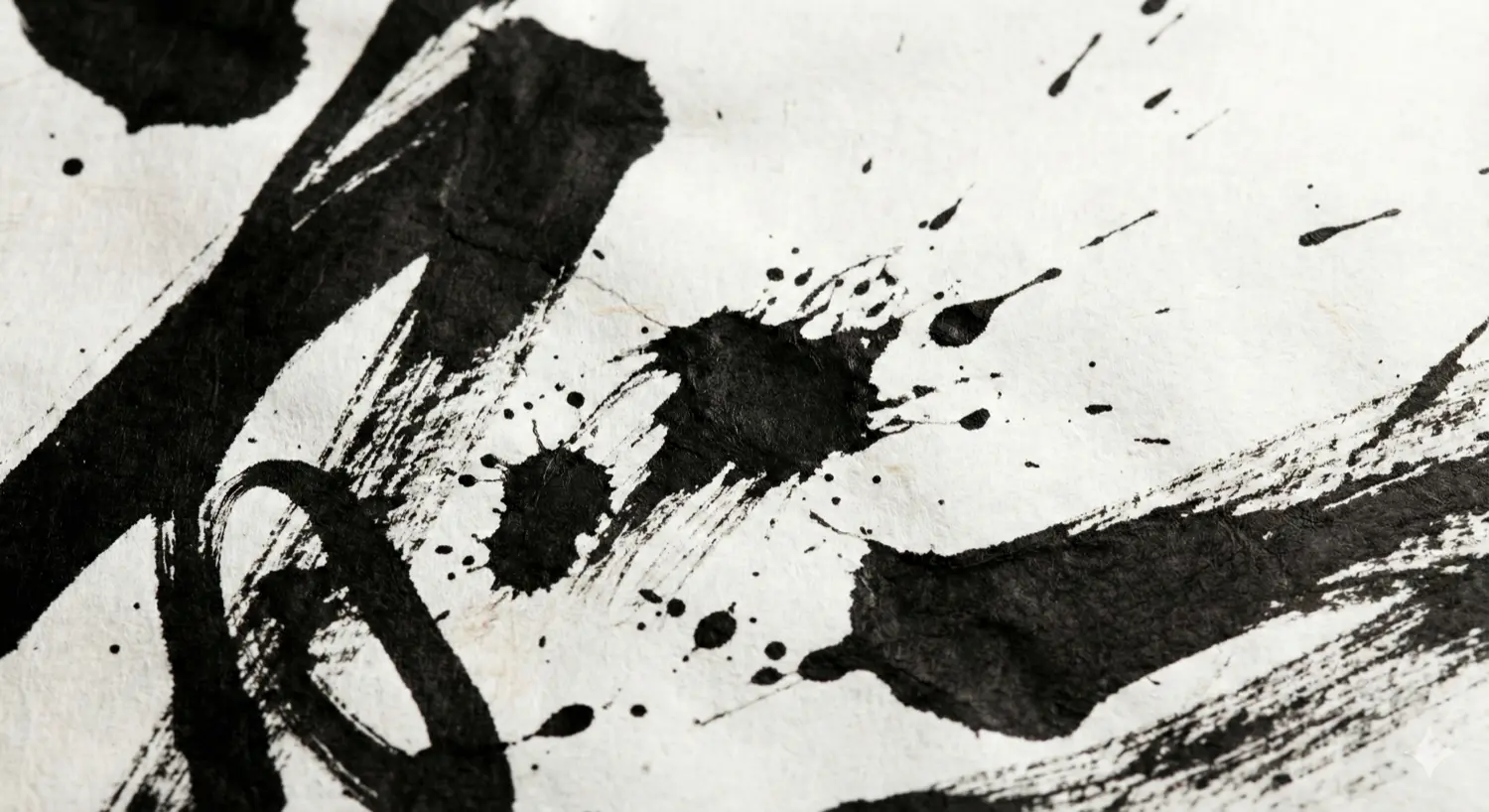
Follow the flow of the ink, and let your breath follow.
3. Styling Your Sanctuary: Placement Guide
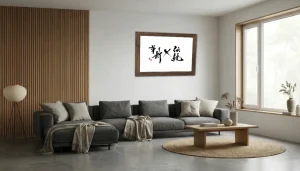
To maximize the mindfulness effect, where you place the art is just as important as what art you choose. Here are specific styling tips for mental well-being:
| Zone | Purpose | Styling Tip |
|---|---|---|
| Meditation Corner | Deep Focus | Floor Level Place the artwork low, leaning against the wall. When sitting in a lotus position, the art should be at eye level to ground your energy. |
| Home Office | Clarity & Flow | Vertical Line A piece with a strong vertical stroke helps straighten your posture and align your thoughts when you look up from your screen. |
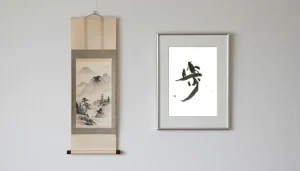
| Bedroom | Decompression | Soft & Rounded Choose art with curves (Enso circles) rather than sharp angles. Soft gray ink tones promote better sleep than heavy black. |
4. An Invitation to Silence
A true luxury home is not defined by expensive furniture, but by the quality of silence it offers.
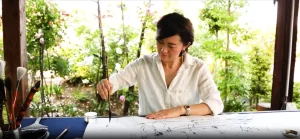
Yabe Chosho’s works are created in a state of “Mushin” (No-mind). When you hang such a piece in your home, that energy of stillness radiates outward, transforming the atmosphere of the entire room.
Find Your Inner Peace
Does your home have a space for silence? Use our simulator to see which artwork brings the right energy to your sanctuary.
自宅を「禅の聖域」に:書のアートがもたらすマインドフルネスな暮らし
デジタルのノイズや絶え間ない通知に追われる現代社会において、家は単に眠るだけの場所であってはなりません。そこは魂のスイッチをリセットできる「聖域(Sanctuary)」であるべきです。
これこそが、「禅インテリア(Zen Interior)」が単なるデザインの流行を超えて求められている理由です。心拍数を下げ、思考をクリアにする空間デザイン。
そしてその静寂な空間において、日本の書(Sho)は、単なる装飾ではなく、マインドフルネスのための「視覚的なアンカー(いかり)」として機能します。
瞑想の際、心を繋ぎ止めるアンカーとしてのアート。
1. 「黒と白」がもたらす心理効果
なぜ私たちは、モノクロ写真や水墨画を見ると心が落ち着くのでしょうか?
色は脳を刺激し、注意を喚起します。対照的に、墨の「黒」と余白の「白」の世界は、視覚的なノイズを吸収します。
禅の哲学に「空(くう)」という概念があります。黒い墨は紙の上にただ乗っているのではなく、白い空間を切り取り、そこに無限の広がりを作ります。
書道アートを眺める時、脳は複雑な色彩情報を処理する必要がありません。そのシンプルで力強いコントラストに身を委ねることで、深い安らぎが得られるのです。
2. 「読む」のではなく、「感じる」
海外の多くのアート愛好家にとって、漢字は「読む文字」ではなく、美しい「抽象的なフォルム」として映ります。これは、マインドフルな空間を作る上で、実は大きな利点となります。
意味を理解しようとする論理的な思考(知的活動)から離れ、純粋に作品のエネルギーに集中することができるからです。伝統的な文字であれ、完全な抽象作品(墨象)であれ、その筆致の流れ、速度、ため、飛沫を目で追うこと。その視覚的な追体験は呼吸のリズムと重なり、自然と瞑想的な状態へと導いてくれます。
筆の流れを目で追い、呼吸を整える。
3. マインドフルネスのための配置ガイド
心の安定効果を最大化するためには、「何を」飾るかと同じくらい、「どこに」飾るかが重要です。ウェルネスの視点からのスタイリング術をご紹介します。
| ゾーン | 目的 | スタイリングのヒント |
|---|---|---|
| 瞑想コーナー | 深い集中 | フロアレベル(床置き) 壁に掛けるのではなく、床に置き壁に立てかけます。胡座(あぐら)をかいて座った時、目線の高さにアートが来ることで、気が地に足がついた状態(グラウンディング)を作ります。 |
| ホームオフィス | 思考の整理 | 垂直のライン 真っ直ぐに引かれた力強い線の作品は、ふと顔を上げた時に背筋を伸ばし、乱れた思考を整える助けになります。 |
| 寝室 | 鎮静・安眠 | 曲線と淡墨 鋭角的な線よりも、円相(円)のような曲線の作品を選びます。また、漆黒よりも柔らかいグレー(淡墨)の作品が、安らかな眠りを誘います。 |
4. 静寂への招待状
真のラグジュアリー・ホームとは、高価な家具で満たされた家のことではありません。「質の高い静寂」がある家のことです。
矢部澄翔の作品は、「無心」の状態で創作されます。そのような作品を部屋に迎えることは、その瞬間に込められた静寂のエネルギーを空間全体に広げ、日常の空気を変えることにつながります。